Feng Shui Tips for Luck in Malaysia: Bagua, Bamboo, Jin Chan & Crystal Cures
Feng shui is the Chinese practice of arranging the built environment to harmonise with the flow of qi (life energy). It arrived in Malaysia with the early Chinese migrants and is now consulted by Malaysian Chinese homeowners and shopkeepers as routinely as a Western household consults an interior designer. The Edge Malaysia has run repeated coverage of feng shui consultants advising Malaysian businesses on wealth placement. This page collects the feng shui tips for luck in Malaysia that are actually in active use — the bagua mirror, the lucky bamboo, the Jin Chan wealth toad, the crystal bowl, the wind chime, and the bagua compass directions Malaysian masters most commonly reference.
The feng shui tradition rests on the bagua (八卦) — an eight-sided map used to overlay any floor plan and identify nine life areas: wealth (southeast), fame (south), relationships (southwest), family (east), health (centre), creativity (west), knowledge (northeast), career (north), and helpful people (northwest). Each area is activated by specific materials, colours, objects and shapes. The practical recommendations below are organised by area.
The Bagua Mirror
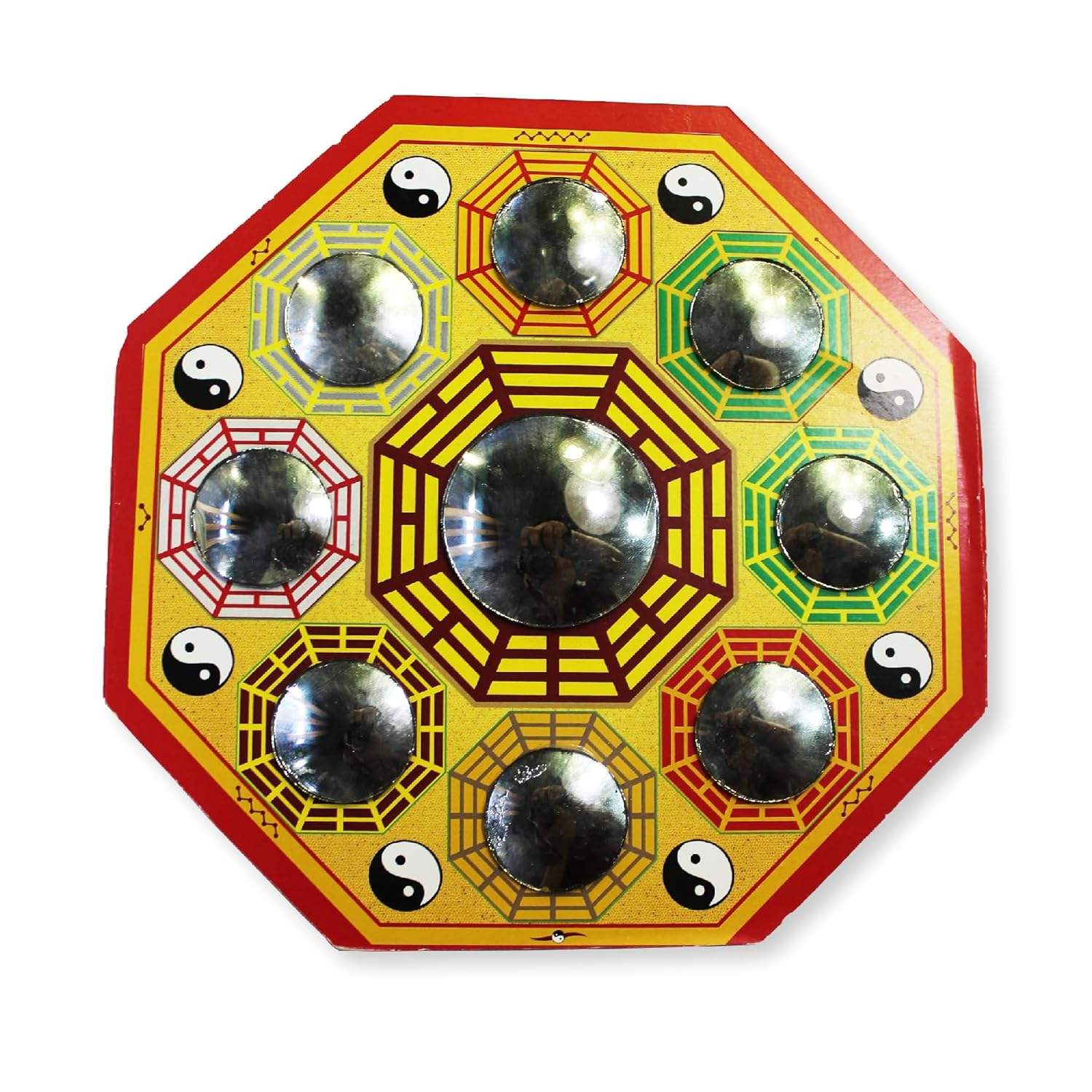
The bagua mirror is a small octagonal mirror (typically 10-15 cm across) framed by the eight trigrams of the I Ching, with a central reflective surface. It is the single most common exterior feng shui cure in Malaysian Chinese shophouses and terrace houses — you will see them above the entrances of older shophouses in George Town, Kuala Lumpur's Chinatown, and the old commercial streets of Ipoh and Malacca.
The bagua mirror's function is to deflect sha qi — "killing energy" — that approaches the home from a hostile direction: a T-junction road pointing at the door, a directly-facing neighbour's roofline, an electricity pylon, a sharp corner from the building opposite. The mirror reflects this energy back toward its source. There are three types of bagua mirror, distinguished by the back of the mirror:
- Flat mirror — reflects energy neutrally; used for general protection.
- Convex mirror — reflects and disperses the negative energy outward in all directions; the most common type for residential use.
- Concave mirror — absorbs and "swallows" the negative energy, neutralising it; used only when the source of the sha qi cannot be deflected back (for example, when it would harm a neighbour).
The bagua mirror must be hung outside the home — above the door or above a window facing the source of the hostile energy. Hanging a bagua mirror inside the home is considered harmful, because it will reflect the home's own energy back at the occupants. The mirror should never face a neighbour's door directly — doing so is considered an act of psychic aggression and is a frequent source of disputes in Malaysian Chinese neighbourhoods.
Lucky Bamboo (Fu Gui Zhu)
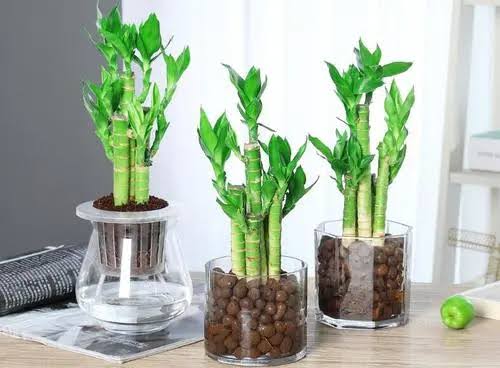
Lucky bamboo is the most popular plant in Malaysian Chinese homes and offices because it is almost impossible to kill, requires only water (no soil), tolerates low light, and visually signals growth and steady upward movement. The plant is not actually bamboo — it is Dracaena sanderiana, a West African species — but its visual resemblance to bamboo and its easy care made it the feng shui houseplant of choice across the diaspora.
The number of stalks matters and is the most important decision when buying a lucky bamboo arrangement (see the full list in our Chinese lucky symbols page). For feng shui placement:
- Southeast (the wealth area) — place an 8-stalk lucky bamboo to activate wealth.
- East (the family/health area) — place a 3-stalk lucky bamboo for harmony.
- Study or office desk — place a 5-stalk lucky bamboo for academic achievement and creativity.
Change the water weekly — stagnant water is considered bad feng shui because it represents stagnation in the corresponding life area. Tie the stalks with a red ribbon to activate the wood element of the plant with the fire element of the red.
Jin Chan — The Three-Legged Wealth Toad
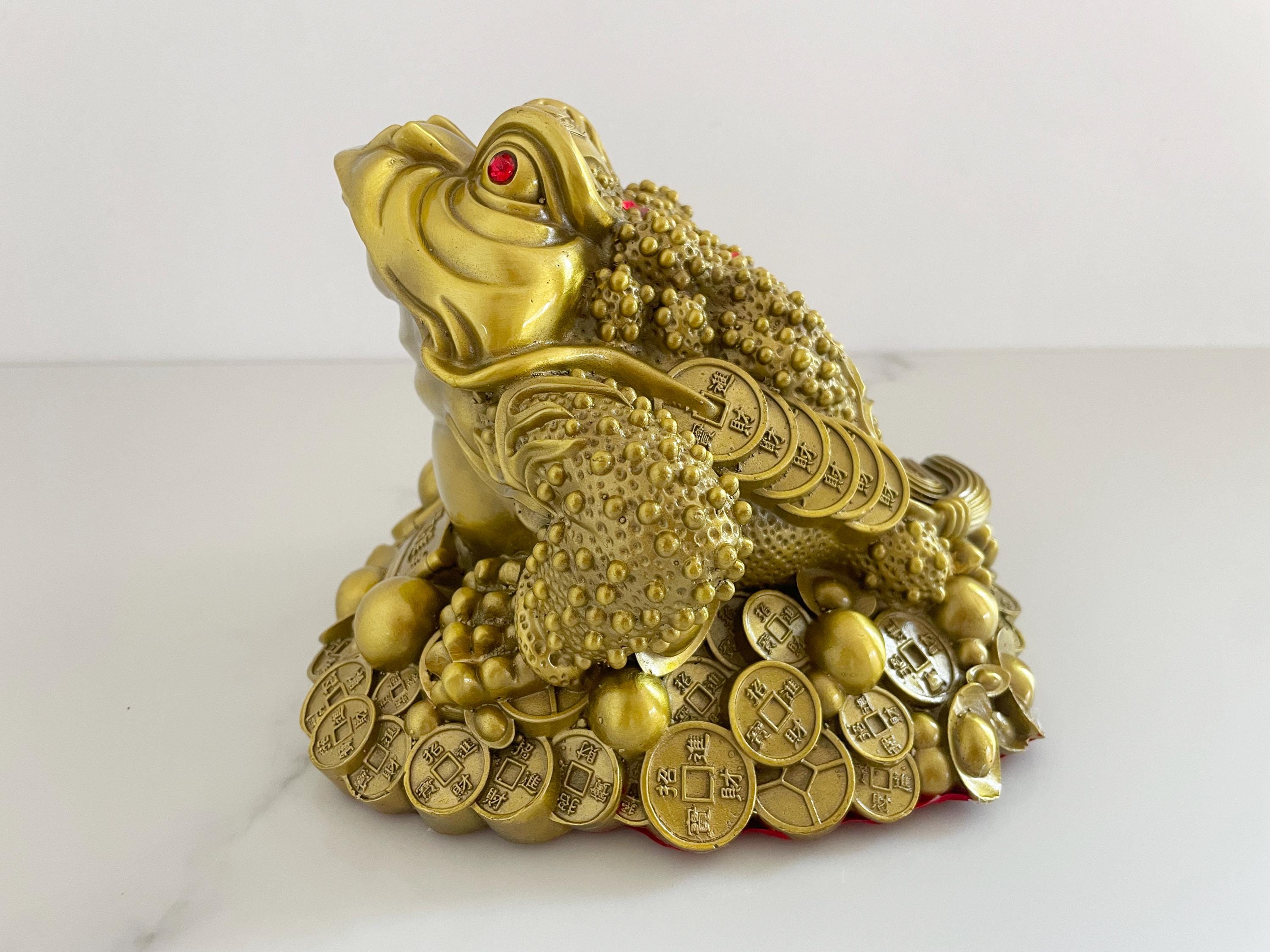
Jin Chan (金蟾, "golden toad") — also called Chan Chu (蟾蜍) or simply the "wealth toad" or "money toad" — is a three-legged toad figurine that sits on a pile of traditional Chinese coins, with a single coin held in its mouth. The legend is that the toad was originally a vicious monster that the Daoist immortal Liu Hai tamed and converted into a creature that now spits gold coins at households. The Jin Chan is the single most common feng shui cure on Malaysian Chinese retail counters — it sits beside the cash register in nearly every Chinese-owned restaurant, jewellery shop and textile store in the country.
The placement rules are strict:
- The toad must face inward — toward the interior of the shop, never toward the door. An outward-facing toad is believed to be "spitting" the wealth out of the premises.
- The toad should be placed near the cash register or the main entrance — but at least 30 cm above floor level, never directly on the floor.
- A second Jin Chan can be placed facing the main entrance from inside — this one welcomes money into the shop.
- For a home, a single Jin Chan can be placed in the southeast wealth corner of the living room.
- The coin in the toad's mouth should be removed and cleaned periodically — some Malaysian shopkeepers do this every Lunar New Year.
The Feng Shui Crystal Bowl
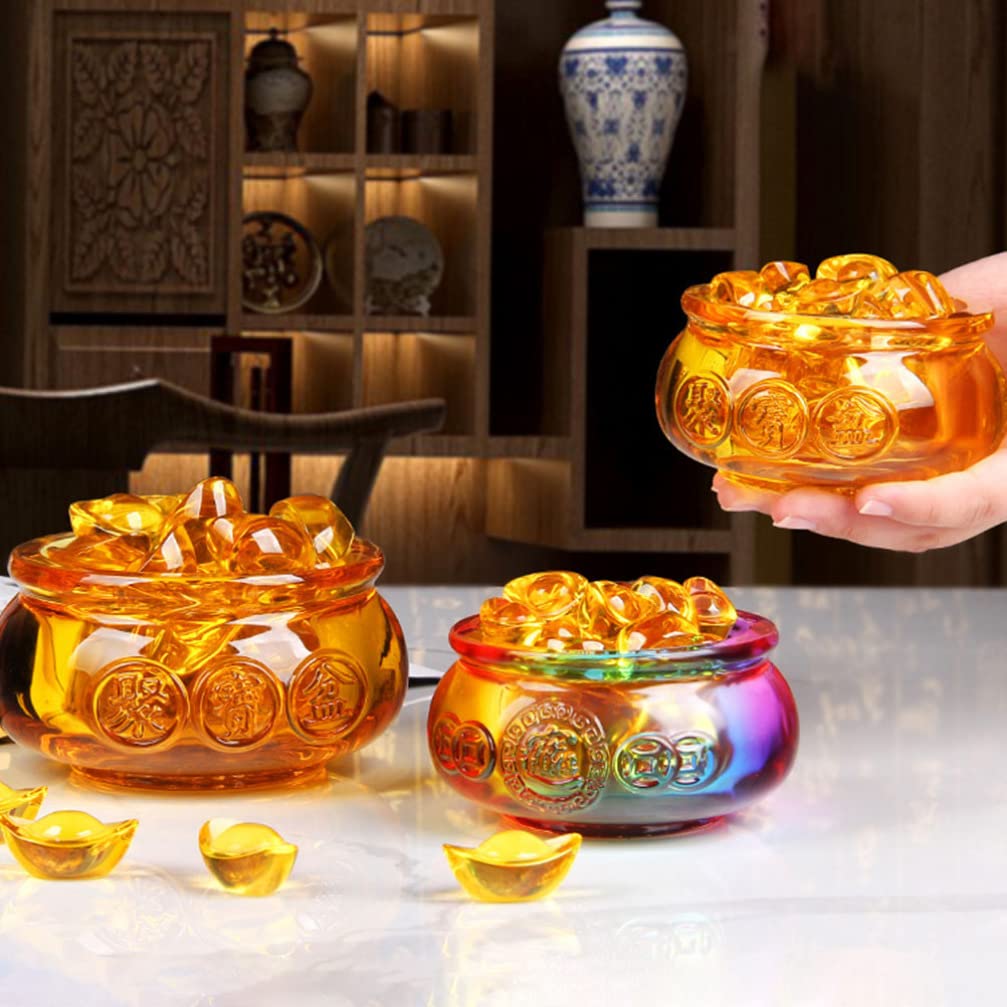
A clear crystal bowl (typically glass, lead crystal or natural amethyst) filled with clean water and topped with a few coins is a classic feng shui wealth activation. The water represents the flow of money; the crystal concentrates and amplifies the energy; the coins provide the symbolic wealth. The bowl is placed in the southeast (wealth) area of the home or shop. The water should be changed weekly, and the coins cleaned monthly. Some Malaysian feng shui consultants recommend placing nine coins in the bowl — one for each sector of the bagua — with the ninth coin placed last to "seal" the cure.
Wind Chimes
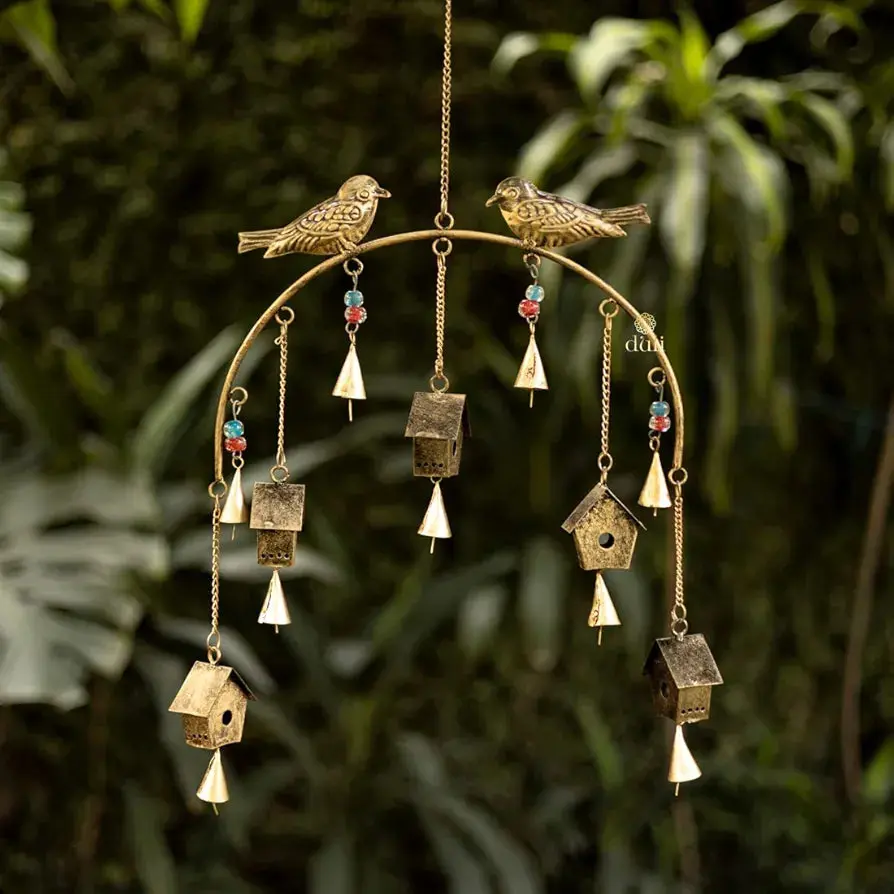
Wind chimes are used in feng shui to disperse stagnant energy and to "announce" the arrival of good energy at a doorway or window. The material of the chime must match the bagua element of the sector where it is hung:
- Metal chimes — west, northwest (metal sectors). Used to activate creativity and helpful-people energy; also used in the children's area of the home.
- Wood or bamboo chimes — east, southeast (wood sectors). Used to activate family harmony and wealth.
- Ceramic or pottery chimes — northeast, southwest (earth sectors). Used to activate knowledge and relationship energy.
The number of rods on a metal chime matters: 6 or 8 metal rods are auspicious; 5 metal rods is used specifically to suppress bad energy in a sector (the "five yellow" cure). Malaysian Chinese homes commonly hang a 6-rod metal chime in the northwest corner of the living room to attract helpful mentors and benefactors.
The Bagua Wealth Directions — Core Feng Shui Tips
For quick reference, the bagua directions most relevant to luck and wealth — the most asked-about topic in Malaysian feng shui — are:
| Direction | Life Area | Element | Activators |
|---|---|---|---|
| Southeast | Wealth | Wood | Lucky bamboo (8 stalks), Jin Chan, crystal bowl with water, jade, gold ingots, the colour purple or green |
| East | Family / Health | Wood | Lucky bamboo (3 stalks), wooden furniture, family photos, the colour green |
| South | Fame / Reputation | Fire | Candles, red objects, bright lights, awards and certificates |
| Southwest | Relationships / Marriage | Earth | Pairs of objects (two candles, two crystals), ceramic items, the colour pink or red |
| West | Creativity / Children | Metal | Metal sculptures, metal wind chimes (6 rods), white or metallic colours |
| Northwest | Helpful People / Mentors | Metal | Metal wind chimes, images of mentors or deities, the colours grey, white, gold |
| North | Career | Water | A small water feature, an aquarium (8 gold fish + 1 black), the colours black or blue |
| Northeast | Knowledge / Self-Cultivation | Earth | Books, ceramic items, crystals, the colour beige or yellow |
The Feng Shui Aquarium
An aquarium placed in the north (career) or southeast (wealth) sector of the home is one of the strongest feng shui wealth activations, because it combines the water element with the symbolic abundance of fish. The classic feng shui rule is eight gold fish and one black fish — the eight gold attract wealth and the black absorbs any negative energy that might otherwise deflect the luck. If a fish dies, it is believed to have absorbed a misfortune meant for the household; replace it immediately with one of the same colour. Malaysian Chinese restaurants often have a large aquarium near the entrance — both as a feng shui activation and as a practical display of the live seafood on the menu.
Decluttering — The Foundation
Before any of the object-based cures above are applied, Malaysian feng shui consultants begin with a single instruction: declutter the space. Cluttered and disorganised spaces block the flow of qi; the bagua areas filled with broken objects, unused items and dust are bagua areas where the corresponding life area is considered "stuck". The Edge Malaysia quotes feng shui consultant Lillian Too: "Clearing clutter matters because a cluttered and disorganized space can block the flow of good natural energies". The rule of thumb is to remove any object you have not used or loved in the last twelve months, with the exception of inherited family heirlooms (which carry ancestral energy regardless of frequency of use).
Frequently Asked Questions
Where should I hang my bagua mirror?
Above the main entrance or above a window that faces the source of the hostile energy (a T-junction, a pylon, a neighbour's sharp roofline). The mirror must be outside the home, never inside. It should never face a neighbour's door directly.
Which way should my Jin Chan (wealth toad) face?
Inward — toward the interior of the shop or home. An outward-facing toad is believed to "spit" the wealth out of the premises. A second Jin Chan may face the door from inside, to welcome money in.
How many fish should I keep in a feng shui aquarium?
Nine total — eight gold (to attract wealth) and one black (to absorb negative energy). If a fish dies, it is believed to have absorbed a misfortune meant for the household; replace it immediately with one of the same colour.
Does feng shui really work?
Feng shui is a cultural and aesthetic practice rooted in Chinese folk cosmology. Its effects on objective outcomes (wealth, health, relationships) are not scientifically established. Its effects on the comfort, intentionality and beauty of a space are real — a thoughtfully arranged space genuinely feels better to live in.
Sources and Further Reading
- The Edge Malaysia — Using Feng Shui to Enhance Your Wealth
- Lillian Too / WOFS — 10 Lucky Superstitions to Enhance Gambling Luck
- Eastern Leaf — Meaning of Lucky Bamboo Stalks and Sticks
- FNP — Lucky Bamboo: Know Meaning Behind Number of Stalks
- Wikipedia — Feng shui
Now place your objects with the right numbers.
Feng shui placement interacts with Chinese number symbolism — 8 stalks of bamboo, 9 coins in a crystal bowl, 8 gold fish plus 1 black. Read the lucky numbers page to lock in the system.