Malay Amulets, Tangkal & Keris: Spiritual Protection in Malaysian Folk Islam
The Malay tradition of spiritual amulets is older than the arrival of Islam in the archipelago, and it persists — quietly — in the wallets, rear-view mirrors and bedside drawers of Malaysian Malay men today. Malay amulets take several forms: the tangkal, a small rolled-metal or paper talisman inscribed with Quranic verses or older Malay magic squares, encased in leather or cord and worn close to the body; the keris (the wavy-bladed Malay dagger); the batu akik (gemstone ring); and a constellation of smaller protective objects this page catalogues.
It is important to understand the religious context first. Mainstream Malaysian Malay Islam treats most amulets as khurafat (religious superstition) and discourages them. Theological hardliners reject them entirely. But folk practice — especially in Kelantan, Terengganu, Kedah and rural Perak — has always accommodated a layer of pre-Islamic Malay animism plus a Sufi-influenced esoteric tradition. The result is a distinctively Malay amulet culture, parallel to the official religion, and a continuing source of fascination for collectors, cultural historians, and (it must be said) Malaysian 4D punters.
The Tangkal (and the Takrut)
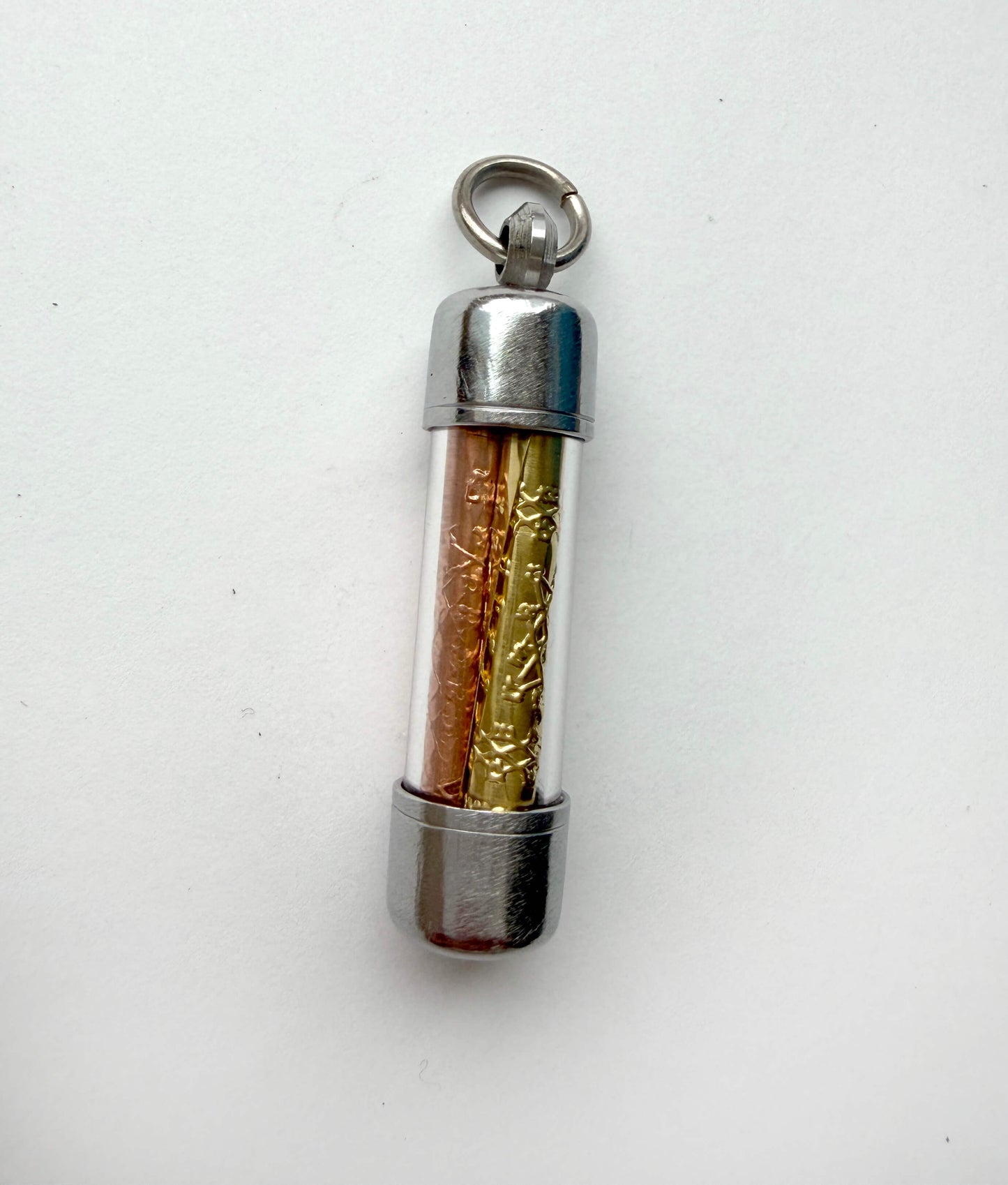
The Malay word tangkal is the local form of the Thai-Sanskrit takrut — a rolled-metal amulet inscribed with sacred text, worn on the body for protection or luck. The typical Malaysian Malay tangkal is a slim cylinder one to three centimetres long, made of brass, copper or silver foil, rolled tight around a tiny strip of paper inscribed with Quranic verses (often Ayat al-Kursi, the Throne Verse), the names of Allah, or older Malay magic squares (the rajah). The roll is bound with thread, encased in leather or vinyl, and hung on a cord around the neck, slipped into a shirt pocket, or stitched inside a belt.
Different tangkal are made for different purposes:
- Tangkal pelaris — for "lucky selling" and trade. Carried by traders and shopkeepers; said to draw customers and steady income.
- Tangkal penunduh — a "subduing" tangkal, said to give the wearer authority over difficult people or dangerous animals.
- Tangkal pendinding — for invulnerability against weapons. Historically worn by Malay warriors and gangsters; today still carried by some motorcyclists and night-shift workers.
- Tangkal seri muka — a "radiant face" charm, popular with people in sales and entertainment, said to make the wearer likable and persuasive.
- Kuku harimau tangkal — incorporating a fragment of tiger claw, for personal power. The Peranakan Museum in Singapore documents this type explicitly in its Malay amulet collection.
The Peranakan Museum collection notes one specific type called the kuku harimau tangkal, which incorporates a piece of tiger claw — in Malay folklore the tiger is a symbol of bravery and command, and a claw fragment was believed to confer those qualities on the wearer. Today, with tigers protected, real claw is replaced with shaped metal.
The Keris
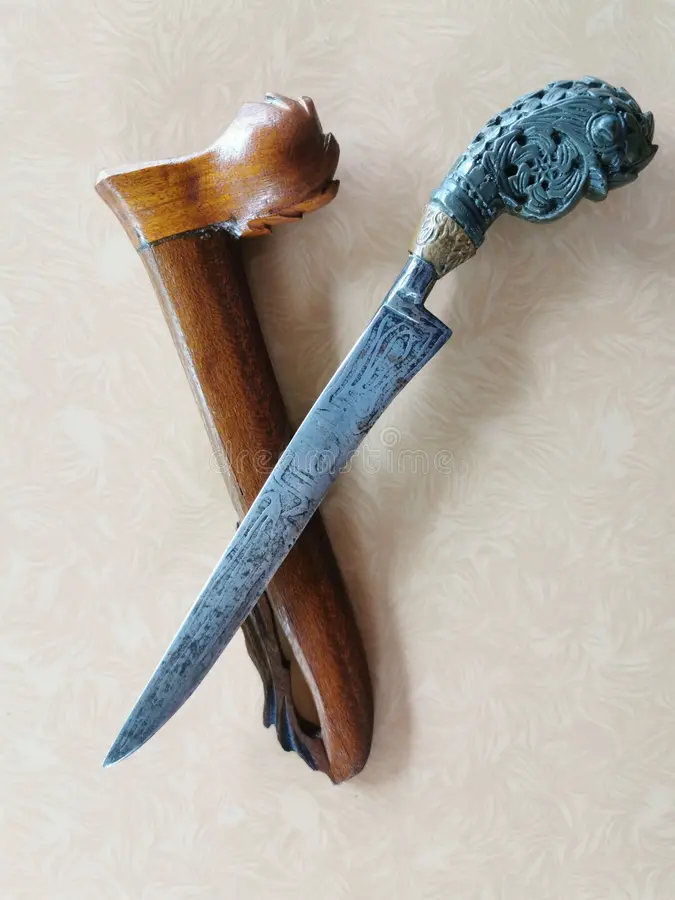
The keris (also spelled kris) is the asymmetrical wavy-bladed dagger of the Malay archipelago. UNESCO inscribed the Indonesian keris on its Representative List of the Intangible Cultural Heritage of Humanity in 2005, describing it as "both weapon and spiritual object". The Malay keris occupies the same cultural space — a hereditary heirloom passed from father to eldest son, a marker of social status, a ceremonial dress item at royal installations and Malay weddings, and a spiritual object believed to possess its own soul.
Traditional belief holds that a true keris is forged by an empu (a master bladesmith with esoteric knowledge) in a ritual that includes fasting, prayer, and the infusion of metal with spiritual power. A keris is not considered complete without its pamor — the pattern-welded design on the blade, created by folding layers of iron and nickelous iron (pamor iron, often from meteorite) in a specific sequence. Each pamor pattern has a meaning: pamor ron kendho (falling leaves) for calm and prosperity, pamor beras wutah (scattered rice grains) for abundance, pamor udan mas (golden rain) for wealth.
The UNESCO Intangible Cultural Heritage entry describes the keris as "famous for its distinctive wavy blade" and notes that "both weapon and spiritual object, the kris is considered to possess magical powers". In modern Malaysian Malay households, an inherited keris is typically displayed on a stand in the living room — not carried. The blade is periodically ritually cleaned with lime juice and arsenic paste in a ceremony called bersih keris, often performed before Hari Raya.
Batu Akik — The Malay Gemstone Ring
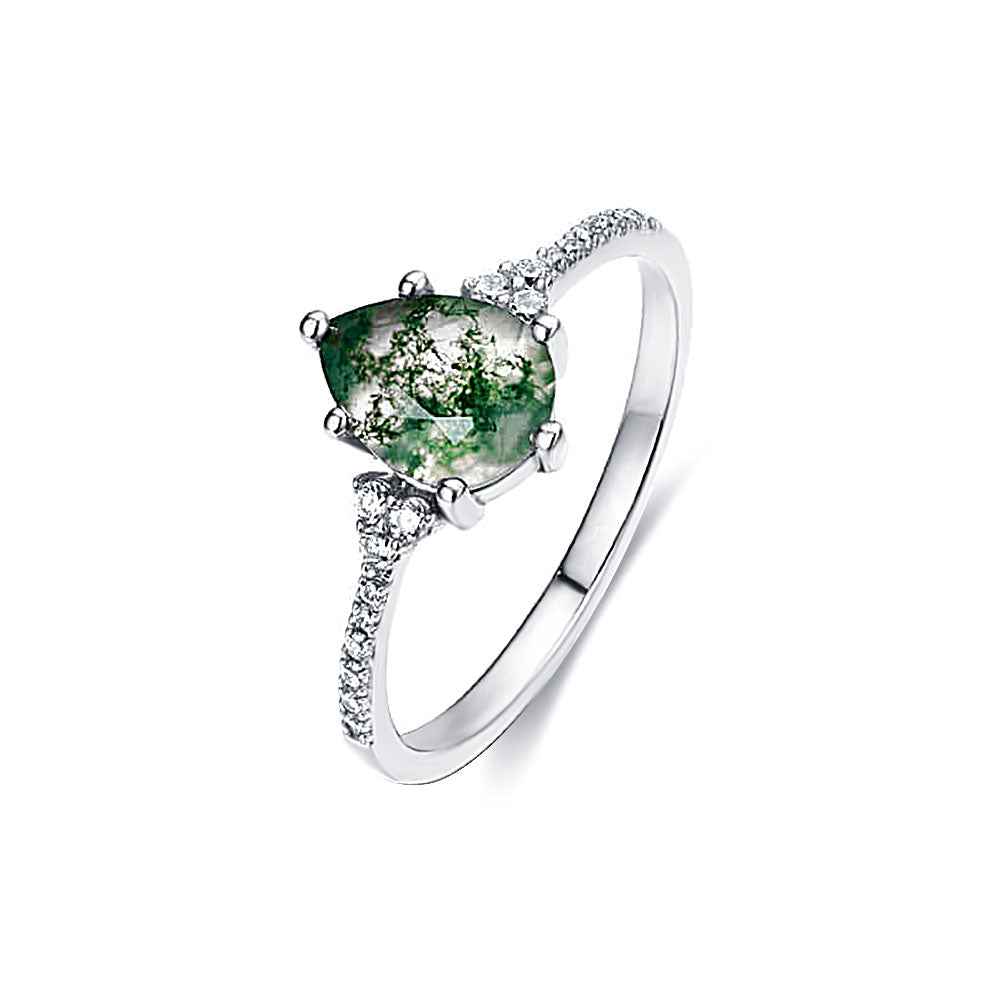
Batu akik is the Malay term for the agate, jasper, quartz or other semi-precious gemstone set in a silver or white-gold ring, worn by Malaysian Malay men — and increasingly by Malay women — as a personal talisman. The culture of batu akik peaked in Malaysia between 2010 and 2018, when weekend batu akik markets in Kelantan, Pahang and Perlis drew thousands of collectors trading stones believed to carry specific properties. The market has cooled since but the rings remain ubiquitous.
The most sought-after stones include kecubung (amethyst, for calm and clarity), jamrud (emerald, for wealth), bacan (a dark green volcanic stone from Bacan Island in Indonesia, for general luck), kelasahan (a honey-amber stone, for attracting love and sympathy), and the rare kinyang (a black or dark-red stone believed to glow in the dark, said to confer invulnerability). Each stone is paired with a specific day of the week and a specific Quranic verse for activation; a stone activated on the wrong day is said to "sleep" forever.
Other Malay Amulets and Charms
Beyond the tangkal, the keris and the batu akik, the Malay folk tradition includes dozens of smaller amulets. The most common ones a Malaysian reader might encounter are:
- Azimat — a generic term for any written amulet, typically a folded paper with Quranic verses or magic squares, sewn into a leather or cloth pouch. Worn around the neck or waist, or pinned inside a shirt collar.
- Susuk — a tiny inserted charm, traditionally a diamond splinter or a piece of gold wire, implanted under the skin by a bomoh (traditional healer). Different susuk for different purposes: facial susuk for beauty, vocal susuk for persuasive speaking, vital susuk for invulnerability. The practice is medically risky and increasingly rare.
- Keringat buaya — "crocodile sweat", actually a resin compound, applied to the skin for authority and intimidation. Used historically by gang leaders and silat masters.
- Rantai leher — a protective necklace strung with beads of particular woods (kemuning, cendana, nangka), often combined with a small tangkal pendant. Worn by children and the elderly.
Malay Amulets and Gambling Luck
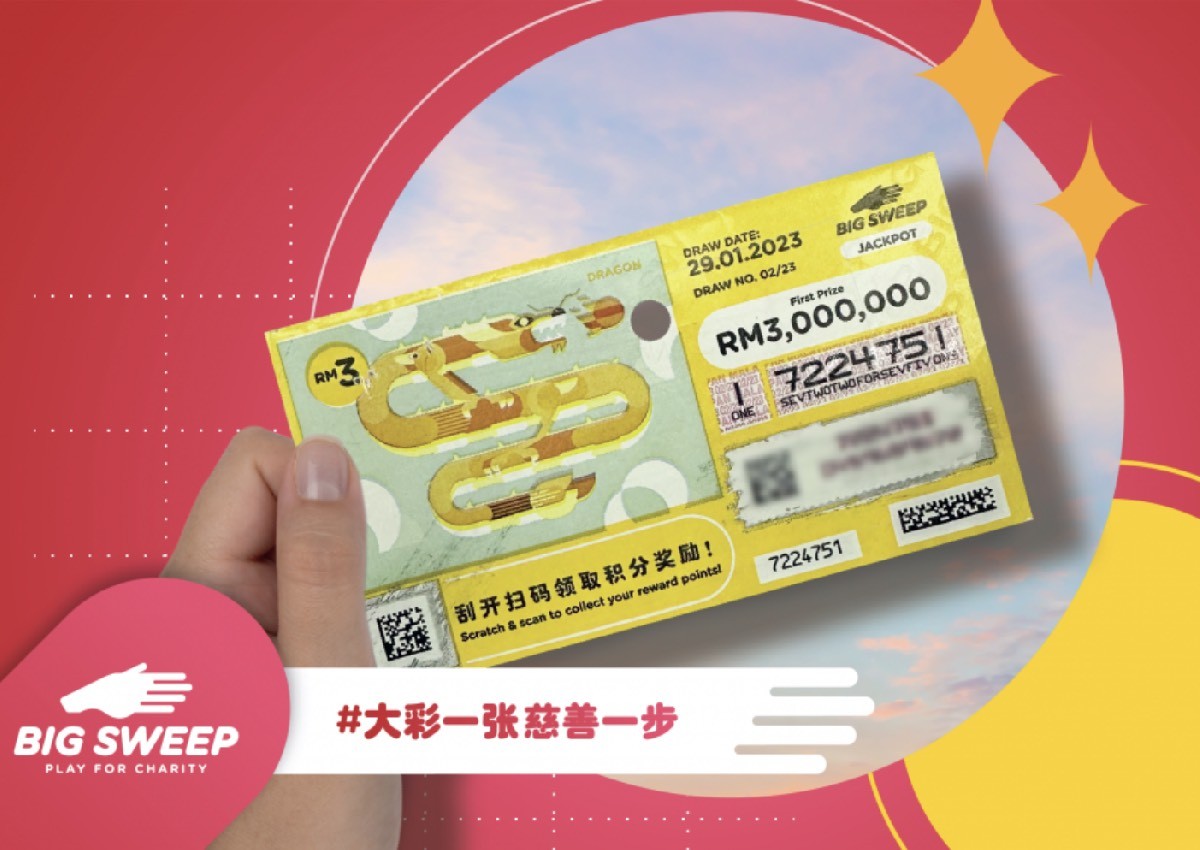
It must be stated plainly: mainstream Malaysian Islamic authorities consider both amulets and gambling to be religiously discouraged (the lottery is haram under Malaysian fatwa). What we describe here is folk practice, not sanctioned religious practice, and TheLuckyEye documents it for cultural reference only — not as an endorsement.
Within the folk tradition, the tangkal most associated with gambling luck is the tangkal pelaris — the same "lucky selling" tangkal used by traders, repurposed for the lottery. Some Malay 4D players also consult a bomoh or dukun to receive a number revealed in a dream or trance, a practice documented in anthropological literature on Kelantanese folk religion. The number is then played at a Magnum, Sports Toto or Da Ma Cai outlet — the three licensed Malaysian number-forecast operators.
How Malay Amulets Are Displayed and Stored
The handling rules for Malay amulets are stricter than for Chinese ones, because the amulet is believed to derive its power from a specific activated text and must not be desecrated. Practical rules observed across Malaysian Malay households include:
- The amulet should be worn above the waist — never in a trousers pocket below the belt, where it would be considered disrespectful.
- The amulet should not be taken into a bathroom; remove it and hang it outside.
- An inherited keris is displayed on a stand with the blade pointing away from the main entrance — never toward it, which is believed to invite conflict into the home.
- A batu akik ring should be removed before eating with the hands (a Malay custom), and cleaned with plain water — never with soap, which can dull the stone.
- If an amulet breaks, the proper disposal is to burn the inscribed paper component (returning it to its element) and bury the metal component (returning it to earth) — never to throw it in the bin.
Frequently Asked Questions
What is the difference between a tangkal and a takrut?
Functionally the same. "Takrut" is the Thai term, "tangkal" is the Malay form of the same word. Both refer to a rolled-metal amulet inscribed with sacred text. In Malaysia, "tangkal" is preferred for locally made amulets; "takrut" is used for Thai-made amulets imported into Malaysian Malay communities.
Are Malay amulets considered Islamic?
Mainstream Malaysian Islamic authorities treat most amulets as discouraged superstition (khurafat). Only amulets containing Quranic verses — and used strictly as a reminder of God's protection rather than as a source of power in themselves — are sometimes given a guarded pass. Anything involving jinn invocation or pre-Islamic Malay animism is rejected outright.
Can anyone own a keris in Malaysia?
Yes, with conditions. The keris is classified under the Malaysian Corrosive, Explosive and Dangerous Weapons Act 1958 — it is a controlled item but legal to own, inherit, display and trade with the appropriate permits. Auction houses and antique dealers in Kuala Lumpur and Penang routinely handle keris sales.
Which batu akik is best for luck?
In Malay folk tradition, bacan (a dark green volcanic stone from Indonesia), jamrud (emerald) and kecubung (amethyst) are most commonly associated with luck. The stone must be "activated" with the correct Quranic verse on the correct day of the week according to the practitioner's tradition.
Sources and Further Reading
- Wikipedia — Kris
- UNESCO Intangible Cultural Heritage — Indonesian Kris
- Peranakan Museum Singapore — Tangkal / Kuku Harimao tangkal collection
- Wikipedia — List of superstitions (Asia)
Compare with the Hindu and Chinese amulet traditions.
Malay folk Islam shares the same regional waters as Hindu-Buddhist Southeast Asia and the Chinese diaspora. Read our Hindu and Chinese symbol guides to see how the traditions overlap.