Western Lucky Charms & Symbols: Horseshoe, Four-Leaf Clover, Rabbit's Foot
Western lucky charms have been quietly absorbed into Malaysian popular culture — the dreamcatcher dangling from a Perodua rear-view mirror, the pewter four-leaf clover on a Sri Hartamas student's keychain, the horseshoe hung above the entrance of an Irish pub in Bukit Bintang. While the Western lucky charms tradition is younger in Malaysia than the Chinese or Malay traditions, it is now thoroughly localised, and several of these symbols — especially the horseshoe and the evil eye — are recognised and used by every community.
This page covers the Western symbols that have actually crossed over into Malaysian use. Each entry explains the cultural origin, the proper way to display or carry the charm, and any "rules" (because most Western charms come with a direction, a placement or a handling rule that is just as strict as a feng shui rule).
The Horseshoe
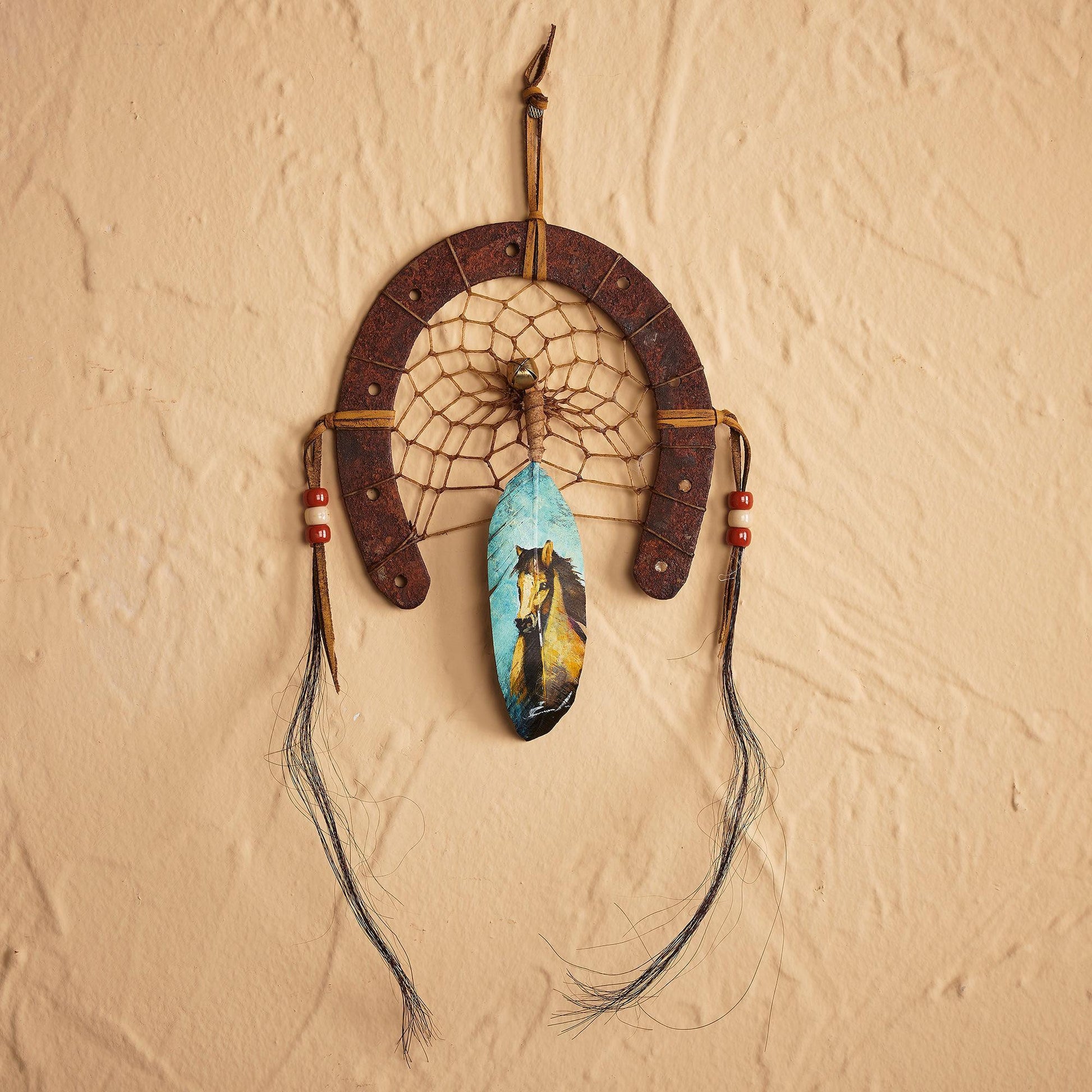
Horseshoes are considered lucky because of traditional beliefs that associate their shape and material with protection and good fortune. Three theories explain the luck: the iron (a metal long believed to ward off evil spirits and fairies); the crescent-moon shape (a protective symbol across many ancient cultures); and the association with Saint Dunstan, a 10th-century English blacksmith who legend says nailed a horseshoe to the Devil's hoof and extracted a promise never to enter a house displaying one.
The single most contested question in Western charm folklore is whether to hang the horseshoe points-up or points-down:
- Points up (U shape) — the dominant English and Irish tradition. The shoe acts as a cup that catches and holds luck inside the home.
- Points down (n shape) — the tradition favoured in parts of Europe and in Vedic Indian culture. The shoe pours luck over anyone walking beneath it.
Either way, the horseshoe should be hung above the main entrance, ideally found (not bought) — a "found" horseshoe on a road or trail is considered twice as lucky as a purchased one. In Malaysia, the found-horseshoe rule is mostly relaxed; pewter and resin horseshoes are commonly bought and hung in shops and pubs.
The Four-Leaf Clover
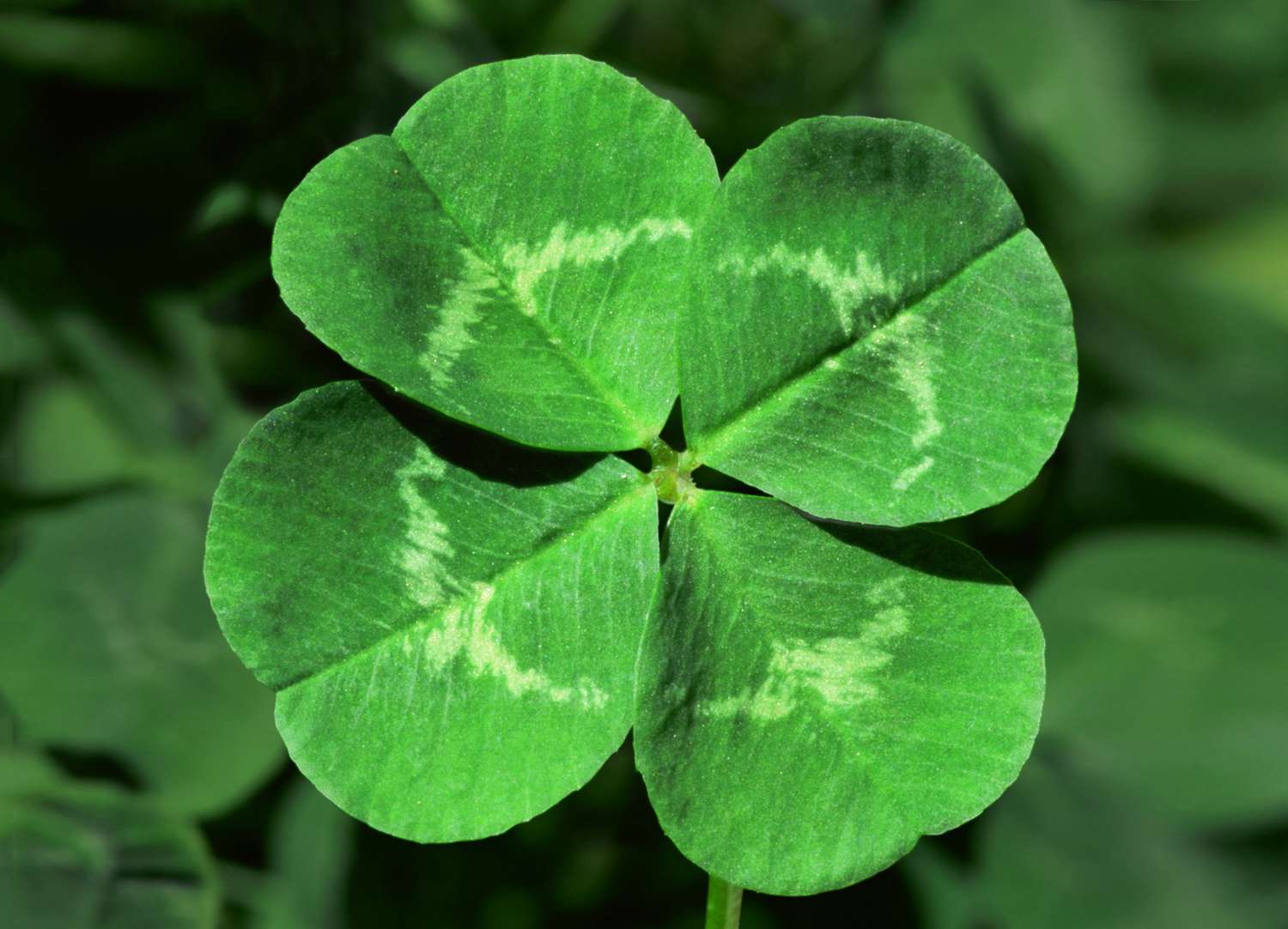
The four-leaf clover is one of the oldest symbols of good fortune in the Western world. The legend, shaped heavily by Christianity, says the four leaves represent faith, hope, love and luck. Botanically, the fourth leaf is a rare genetic mutation — roughly one in 10,000 clovers — which explains why finding one feels like a small miracle. In Irish Celtic tradition, the more common three-leaf shamrock was already considered lucky as the symbol St. Patrick used to explain the Holy Trinity; the rare four-leaf version simply amplified that luck.
In Malaysia, the four-leaf clover appears most often as a pressed souvenir inside keychains, wallets and bookmarks. The "Clover" brand of stationery sold in Malaysian bookstores leans heavily on this association, and Malaysian jewellers sell small four-leaf clover pendants in jade and white gold as good-luck gifts for school-leavers.
The Rabbit's Foot
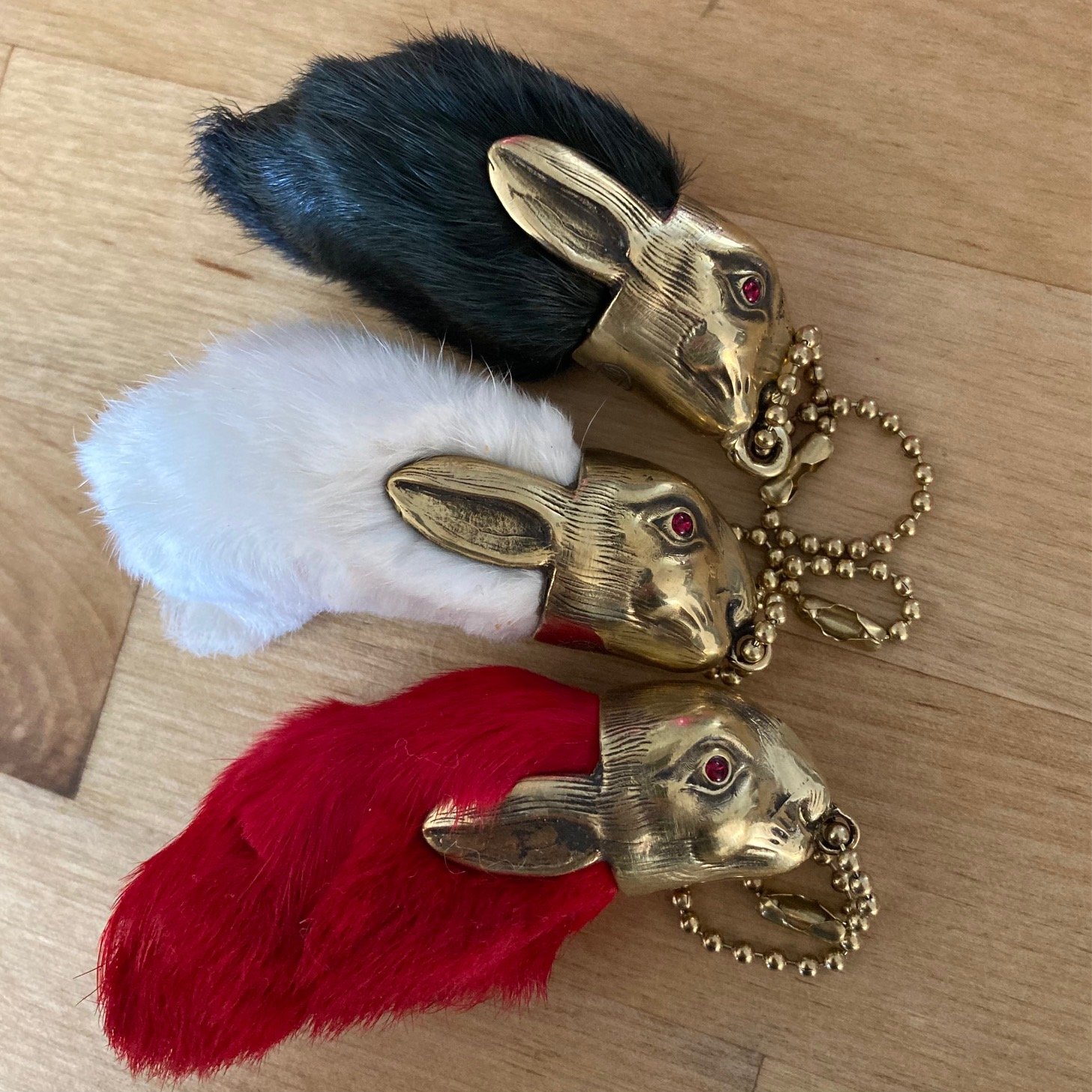
A rabbit's foot, worn or carried, is a North American and English lucky charm originating from a hare's foot in older English folklore. The charm became a casino-floor cliché in mid-20th-century America — a small dyed rabbit foot on a keychain, carried in the pocket by card players and slot-machine regulars. The original hoodoo (African-American folk magic) requirement was strict: the rabbit had to be caught in a graveyard, at midnight, on a Friday the 13th, and the left hind foot was the only one that worked.
Modern Malaysian usage is purely symbolic — synthetic or faux-fur rabbit-foot keychains are sold in night markets and used by younger gamblers as a casual pocket charm. They are more a pop-culture nod to Western gambling films than a serious folk practice.
The Dreamcatcher
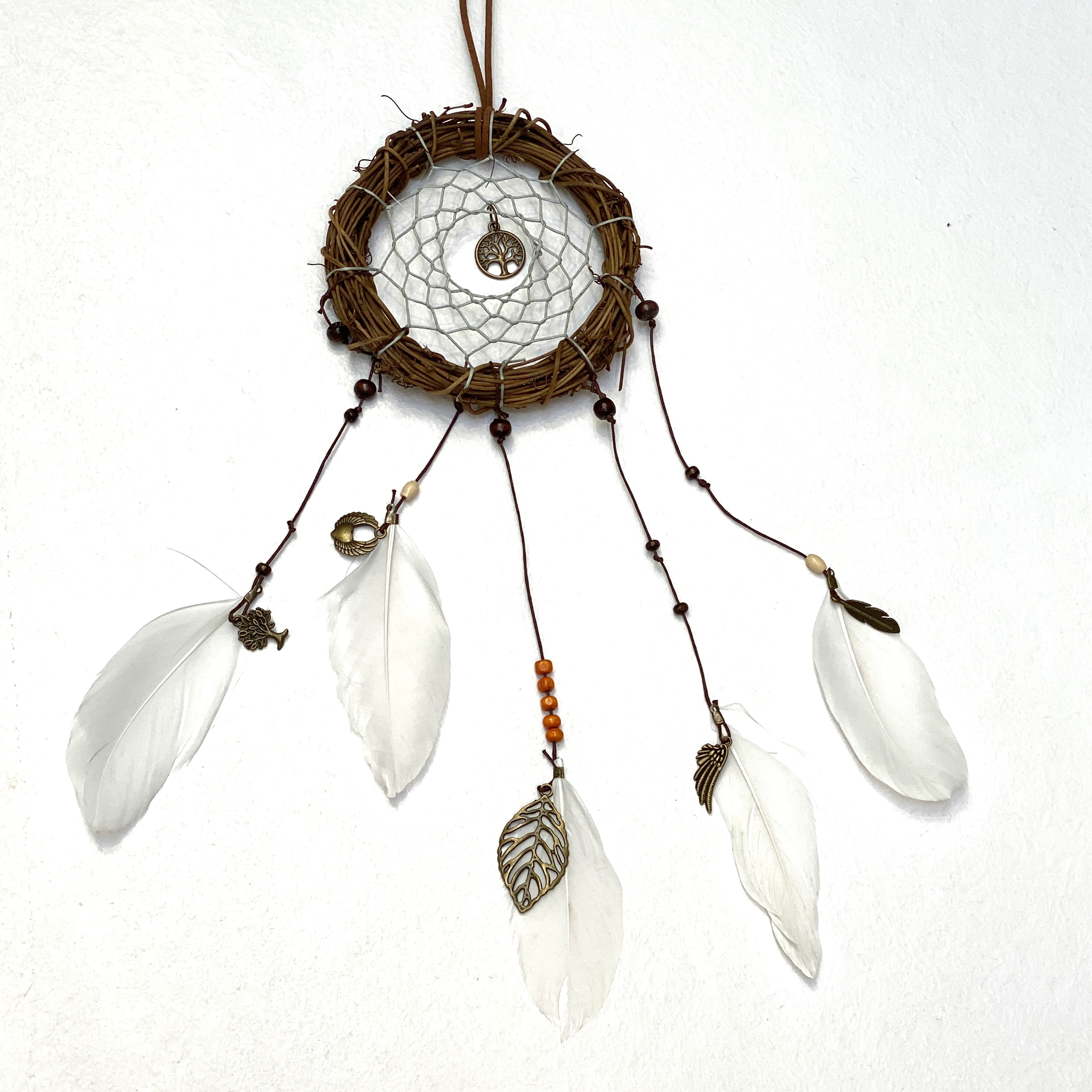
The dreamcatcher comes from the Ojibwe (Chippewa) people of North America. In Ojibwe cosmology the human mind is susceptible to dark spirits when it is weakest — during sleep — and the dreamcatcher is a woven talisman hung above the bed. The web lets good dream spirits pass through while trapping the bad ones in the pattern, which is then dissolved by the morning light. The traditional dreamcatcher includes a feather at the bottom (to guide good dreams down to the sleeper) and a single bead or stone in the centre (representing the spider that wove the web, or a trapped bad dream).
In Malaysia, dreamcatchers are widely used as decorative car and bedroom ornaments with only a vague awareness of their Ojibwe origin. They are sold in most night markets and are popular with Malaysian students during exam season, who hang them above the study desk for clearer thinking and better sleep.
The Nazar — Evil Eye Amulet
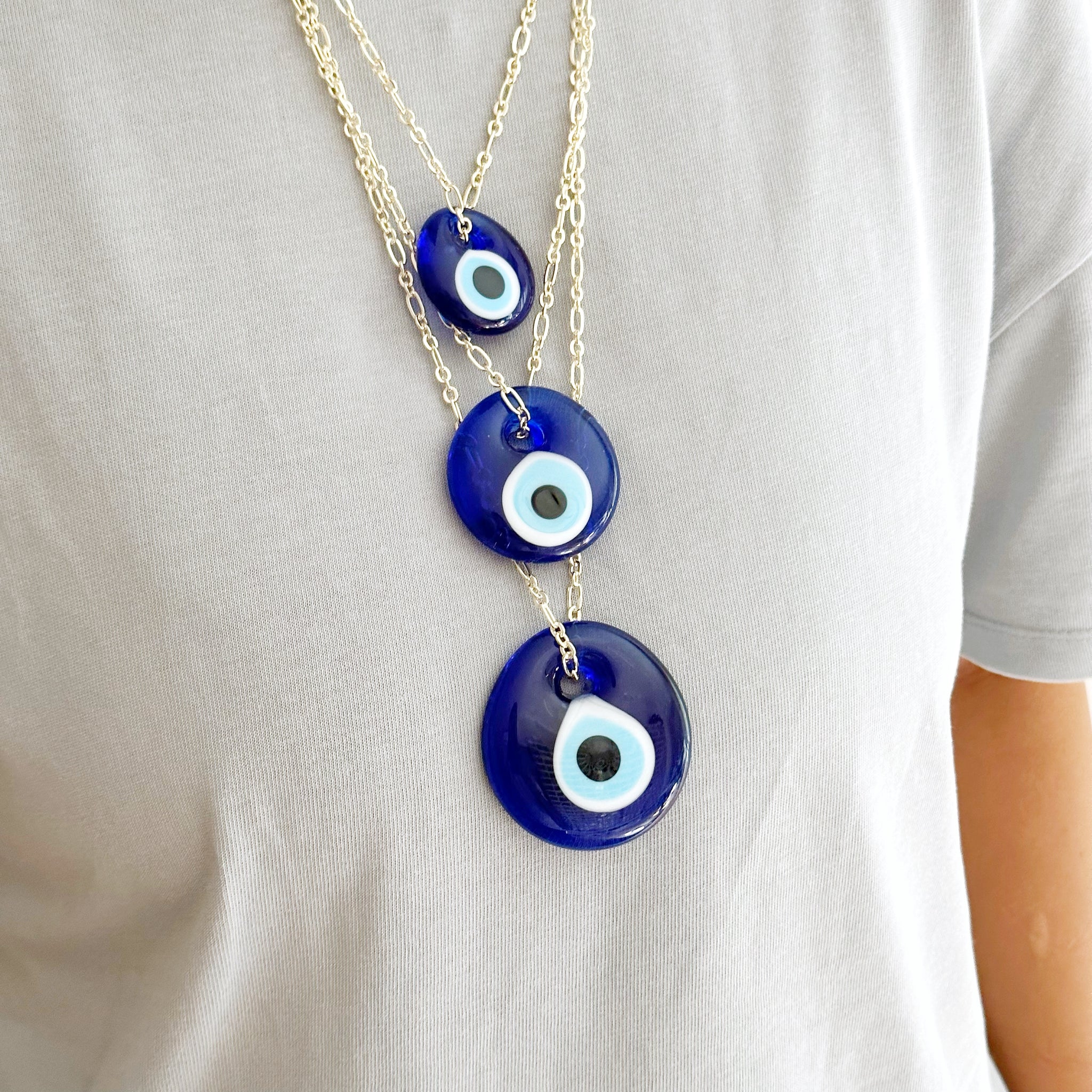
The nazar (from the Arabic word for "sight" or "attention") is an eye-shaped amulet believed to protect against the evil eye — the negative force believed in many Mediterranean, Middle Eastern and South Asian cultures to be projected by an envious glance. The classic nazar is a concentric circle of dark blue, white, light blue and black glass, and is ubiquitous in Turkey, Greece, the Levant, and now across the global diaspora.
The defining feature of a nazar is its sacrificial logic: when the bead cracks or shatters on its own, it is believed to have absorbed a strong charge of negativity and protected its wearer from a specific misfortune. At that point the cracked nazar must be replaced immediately. The amulet is hung at the entrance of homes, worn as a bracelet or pendant, pinned to a baby's clothing, attached to a pet's collar, and tucked into a car's dashboard.
In Malaysia, the nazar is popular across all communities — Malay, Chinese, Indian and expat — and is sold in almost every night market. It crosses religious boundaries because the evil eye belief exists in some form in Islam, Hinduism, Judaism, and Mediterranean Christianity. For a deep cultural reference, see the Wikipedia article on the nazar amulet.
The Hamsa (Hand of Fatima)
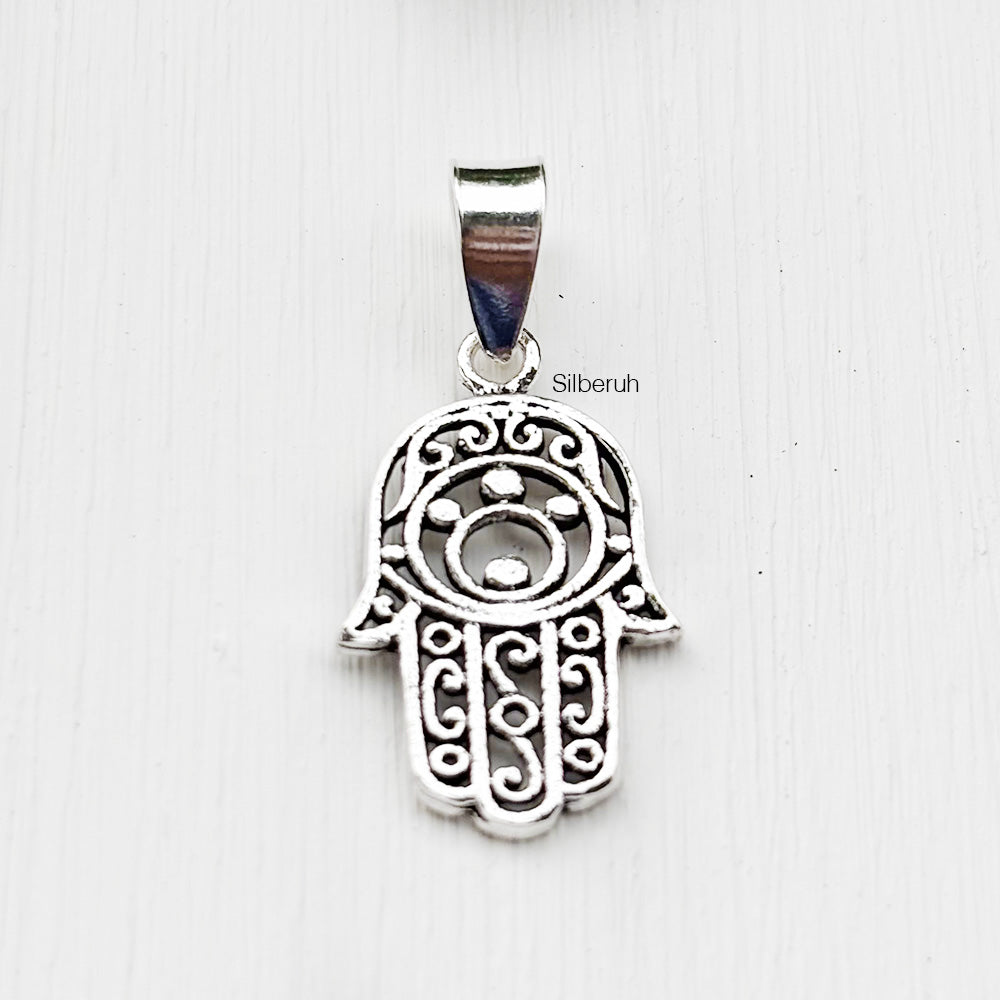
The hamsa (Arabic: khamsa, "five") is a palm-shaped amulet depicting an open right hand, often with an eye in the centre, used throughout the Middle East and North Africa as a defence against the evil eye. The five fingers represent the five pillars of Islam in the Muslim tradition, the five books of the Torah in the Jewish tradition (where the amulet is called the Hand of Miriam), and the five senses or the five wounds of Christ in Middle Eastern Christian use.
Hamsa jewellery is now widely sold in Malaysian boutiques as a fashion item with a folkloric edge, popular with Malaysian Muslim women who wear it as a necklace or hang a small metal version from their car's rear-view mirror. The hamsa is often paired with a nazar — the central eye of the hamsa is itself a stylised nazar.
The Lucky Penny
"Find a penny, pick it up, and all day long you'll have good luck" is one of the most widely repeated folk sayings in the English-speaking world. The lucky penny tradition comes from the ancient belief that metals — especially copper and silver — were gifts from the gods and therefore inherently protective. The rule is that a found penny is only lucky if it is lying heads-up; a tails-up penny should be turned over (so the next person to find it gets the luck) or left in place.
In Malaysia, the lucky penny has no direct local equivalent, but the broader belief in found coins as lucky is shared with the Chinese tradition of leaving a coin inside a red envelope for the next recipient. Some Malaysian Chinese gamblers carry a foreign coin (a US cent, a UK penny) as a Western-lucky counterpart to the jade in the opposite pocket.
Western Lucky and Unlucky Numbers
Western number folklore is much thinner than Chinese number symbolism, but a few numbers carry strong associations:
- 7 — the most universally lucky number in Western culture, rooted in Christianity (seven days of Creation, seven sacraments, seven virtues) and reinforced by ancient cosmology (seven classical planets, seven days of the week).
- 13 — the most universally unlucky number in Western culture, rooted in the Last Supper (thirteen diners, one of whom betrayed Jesus) and reinforced by Norse mythology (the god Loki was the thirteenth guest at a feast that ended in murder). Many Western hotels skip the 13th floor; some Malaysian hotels built to international standards do the same.
- 11:11 — a more recent numerology belief that wishes made at 11:11 (morning or evening) are especially likely to come true. Popular with Malaysian millennials and widely shared in social-media culture.
For a deeper comparison with Chinese number symbolism — where the rules are much stricter — see our lucky numbers for 4D in Malaysia page.
How Malaysians Combine Western Lucky Charms with Eastern Symbols
One of the more interesting developments in Malaysian folk practice is the free mixing of Western and Eastern charms. It is not unusual to see a Malaysian car with a Chinese coin string, a Malay tangkal, an Indian rudraksha bead, a Turkish nazar and a Native American dreamcatcher all hanging from the rear-view mirror at the same time. Folk religion in Malaysia is essentially syncretic and additive — if a charm is said to bring luck, why not stack them?
There is no cultural rule against this combination. The main practical concern is clutter: most Malaysian feng shui consultants recommend limiting the rear-view mirror to one or two amulets to keep the driver's view clear. For the wallet, two charms is the practical maximum — one Western (a horseshoe charm, a four-leaf clover token) and one Eastern (a jade piece, a Chinese coin).
Frequently Asked Questions
Which direction should I hang my horseshoe?
Points up holds luck inside (the dominant English and Irish tradition). Points down pours luck over anyone walking beneath (favoured in parts of Europe and in Vedic Indian practice). Either is acceptable — pick one and stick with it; do not flip the same shoe repeatedly.
What does it mean when an evil eye amulet cracks?
In Mediterranean and Middle Eastern tradition, a nazar that cracks on its own has absorbed a strong charge of negative energy that was meant for you. The amulet has done its job and should be replaced immediately.
Are four-leaf clovers real?
Yes. The four-leaf mutation of the white clover (Trifolium repens) occurs naturally at a rate of roughly one in 10,000 clovers. They can also be deliberately cultivated; many commercial "lucky clover" products come from cultivated patches rather than wild finds.
Is it OK to combine Western and Chinese lucky charms?
Yes. Malaysian folk practice is additive and syncretic. The only practical constraint is physical: a cluttered car mirror is a driving hazard, and an overstuffed wallet is uncomfortable to carry. Two to three charms is the practical maximum.
Sources and Further Reading
- Wikipedia — List of lucky symbols
- Wikipedia — Nazar (amulet)
- Wikipedia — Horseshoe
- Reader's Digest — 15 Good-Luck Charms from Around the World
- University of Kansas CREES — Nazar Boncuğu
Now read the other traditions Malaysians mix in.
The horseshoe and the nazar make more sense next to a Chinese gold ingot and a Malay tangkal. Browse our other cultural deep dives to see the full Malaysian amulet landscape.